Apocalyptic mindset
Whether it’s climate, AI, civil war, or the thousand mythologies explored in fiction, television and cinema, such as plagues, aliens, natural disasters or anything in between or beyond, one thing is certain: the apocalyptic mindset is not a bug, but a feature of our post-modernity.
And how can it not be, since Europe had at least 1,000 years to incubate the kind of thinking that obssesses over sudden loss, death, destruction and world collapse.
The period between roughly 500 and 1500 AD was when European medievals went to apocalyptic school and graduated from it magna cum laude.
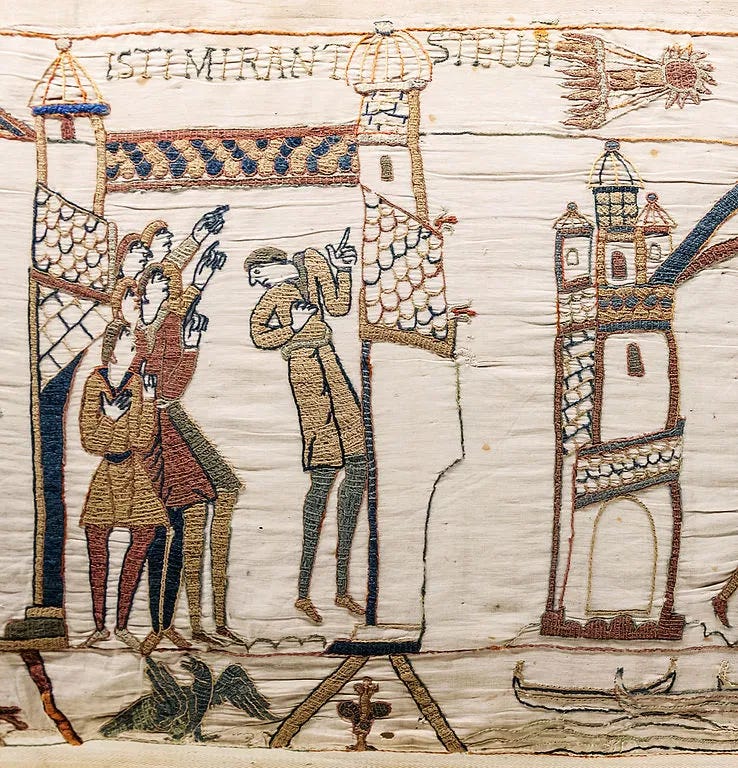
Medieval people lived in a more or less constant state of apocalyptic expectation, fuelled by plague, famine, war, and celestial omens. The framework was the Old Testament, but the phenomenology of it went beyond Scripture.
With beautiful hindsight bias, medieval historians at the time were able to explain every political and social disruption by portents and omens that foreshadowed and predicted impending doom, even though no scholar at the time was able to make any prediction before the fact. In fact, they seemed to lack any interest in predicting events based on available evidence. All predictions were post-factum narratives. For example, in the chronicle I studied in my doctoral thesis, the civil war of 1214-15 was ‘predicted’ (or postdicted?) in the 1220s by natural signs such as, predictably, comets and eclipses, and, less predictably, by a multitude of deer galloping down from the north of England and throwing themselves into the sea near Bristol.
Despite this “post-predictive” mindset, the medieval mind was geared altogether towards expecting the future to be bleak, bleaker, the bleakest, moving towards the end of the world, in alignment with a very literal reading of the book of the Apocalypse and the other apocalyptic passages in the rest of the Old Testament.
The Renaissance and early modernity may have done away with post-predictive predictions, but the negative forward-thinking remained. And it remains to this day, muddled with anxieties about the end of the world, fascination and fear.


