


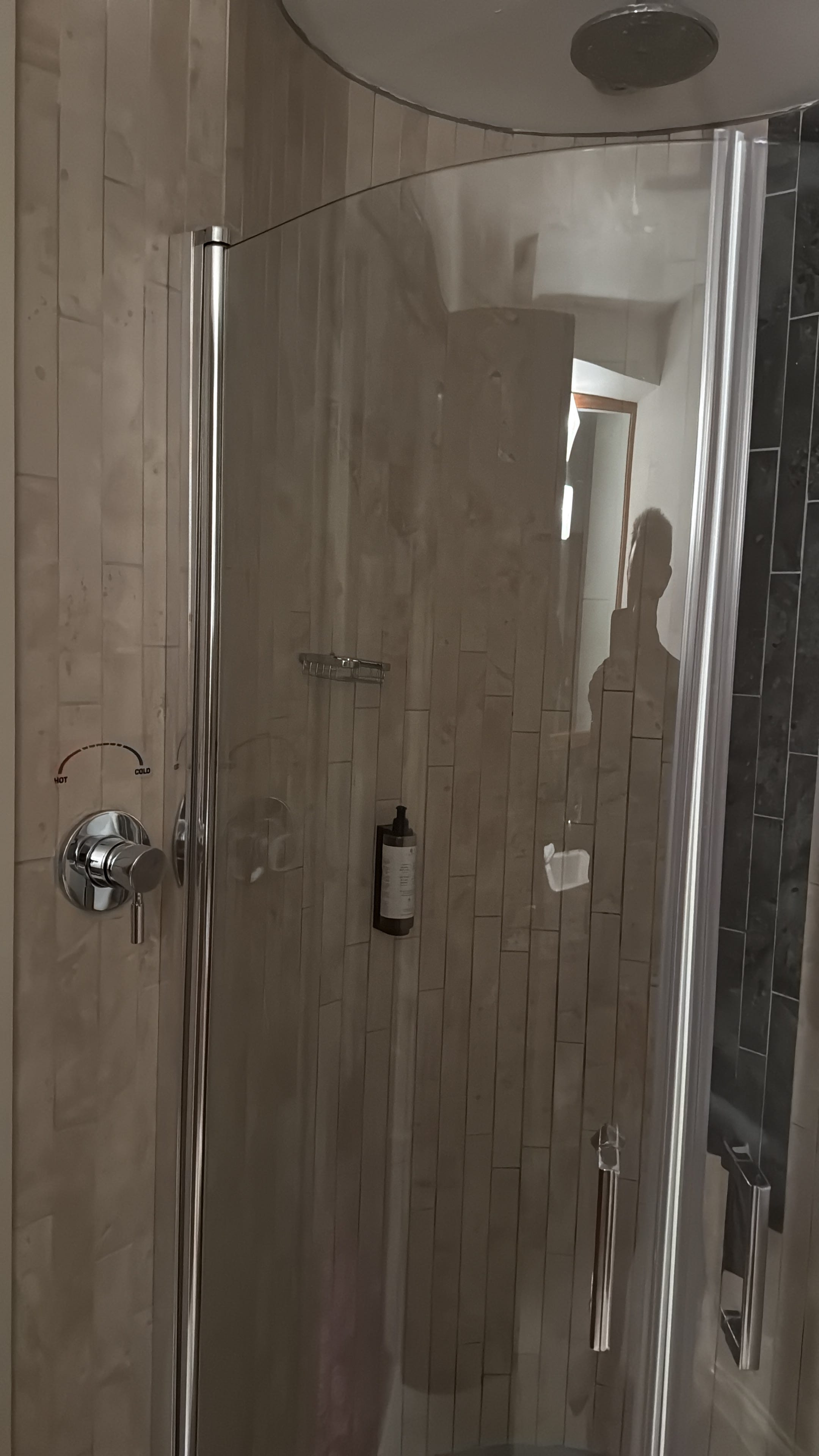
I’ve just come back from a business trip to Ireland. As I had to spend the night there, the client had put me up in a hotel in the middle of nowhere - and when you’re unfamilar with the surroundings, anywhere is the beginning, middle and end of nowhere.
I’ve seen many design fiascos in my life (and read about even more), but this hotel room bathroom goes straight to the top of the list.
The bathroom was rather roomy, with a rolltop bath and a shower cabin. But, as you can see in the picture above, the shower water taps were mounted on the wall outside the glass shower cabin, beyond reach.
As I quipped to my colleagues the next day, it’s an arrangement for intimate couples, one showering, the other setting the water temperature and turning it on and off, and then switching roles, in addition to any role play instigated by this setup. I was on my own, so the problem became pretty annoying as I had to step in and out to adjust the water temperature. I finalised my daily step count that very moment.
The alpha and omega of design is user-centricity. If it fails this test, everything else fails. Design thinking is a mouthful for something simple: do you keep the user in mind throughout the process? The hotel designers must have hated the person in the shower, or showering was never their thing.
It makes me think of the development of the codex, the bound book, in the first centuries of our common era. This is Biblonia after all. Though we take the book as we know it for granted, designing the codex was one of the greatest inventions of the last 2,000 years. And though the design process remains undocumented, those who took us from the papyrus roll to the parchment leaves sewn to a spine and bound in leather were masters of user-centricity. They’d have to say a thing or two to our Irish loo designers.