In defense of tautology
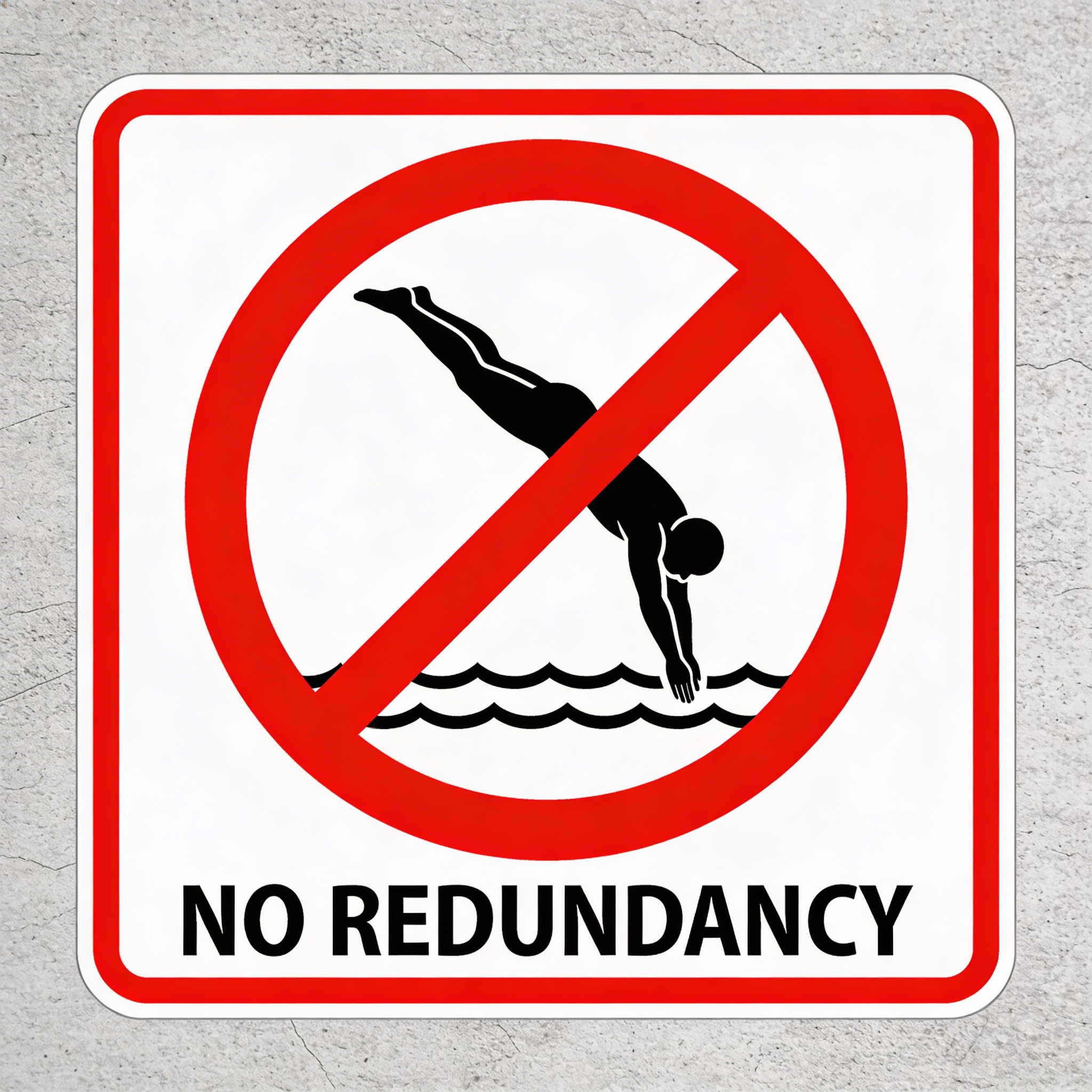
One thing you won’t hear anyone saying is ‘Now, let’s shallow dive into this topic.’ And if there’s no other type of diving imaginable or allowed, as most recreational swimming pools signs will warn against, then what’s the point of deep-ing the verb into a tautological modification?
Welcome to one of the more quietly fascinating corners of linguistics: the study of words that arrive uninvited, add nothing, and yet somehow make themselves entirely at home. In the Organon, Aristotle observed how synonyms create unnecessary redundancy, without language trying to shed the superfluity.
Language, at its most functional, is an efficient system. New words earn their place by filling genuine gaps. Schadenfreude entered English because no native equivalent existed. Ghosting named a recognisable social behaviour that had previously gone unnamed. Synonyms co-exist productively because melancholy, sadness, and grief occupy meaningfully distinct emotional registers. This is language behaving well — diversifying to serve communication, with each addition justified by need.
But language also moves in the opposite direction. Redundancy accumulates quietly, and often without resistance. We plan ahead, as though planning behind were an option. We offer free gifts, as though gifts could be purchased. We reference past history, as though history could be future. We speak of lived experience (perhaps the most revealing tautology of recent decades) as though experience could be unlived, observed from a distance, or borrowed from someone else. In each case, the modifier contributes nothing that the noun or verb hasn’t already handled. One word was sufficient; two were used regardless.
These constructions are tautologies — and they are remarkably persistent. Revert back. Close proximity. End result. Unexpected surprise. Each redundant addition signals emphasis or thoroughness while delivering neither.
What they deliver instead is the impression of precision, which may explain their durability. In professional contexts especially, the longer formulation can feel more considered, more deliberate, even when it is simply more.
This points to something worth sitting with for a while.
Tautology is not merely a grammatical error to be corrected; it is evidence of how language actually works in practice.
Words are not selected purely for efficiency. They are selected for resonance, familiarity, and social function. Expressions like lived experience or deep dive persist not because they are precise, but because they signals a particular kind of seriousness.
The redundancy is doing social work, even as it fails logical scrutiny.
Language, it turns out, is under no obligation to be economical. It is only obliged to be used.


