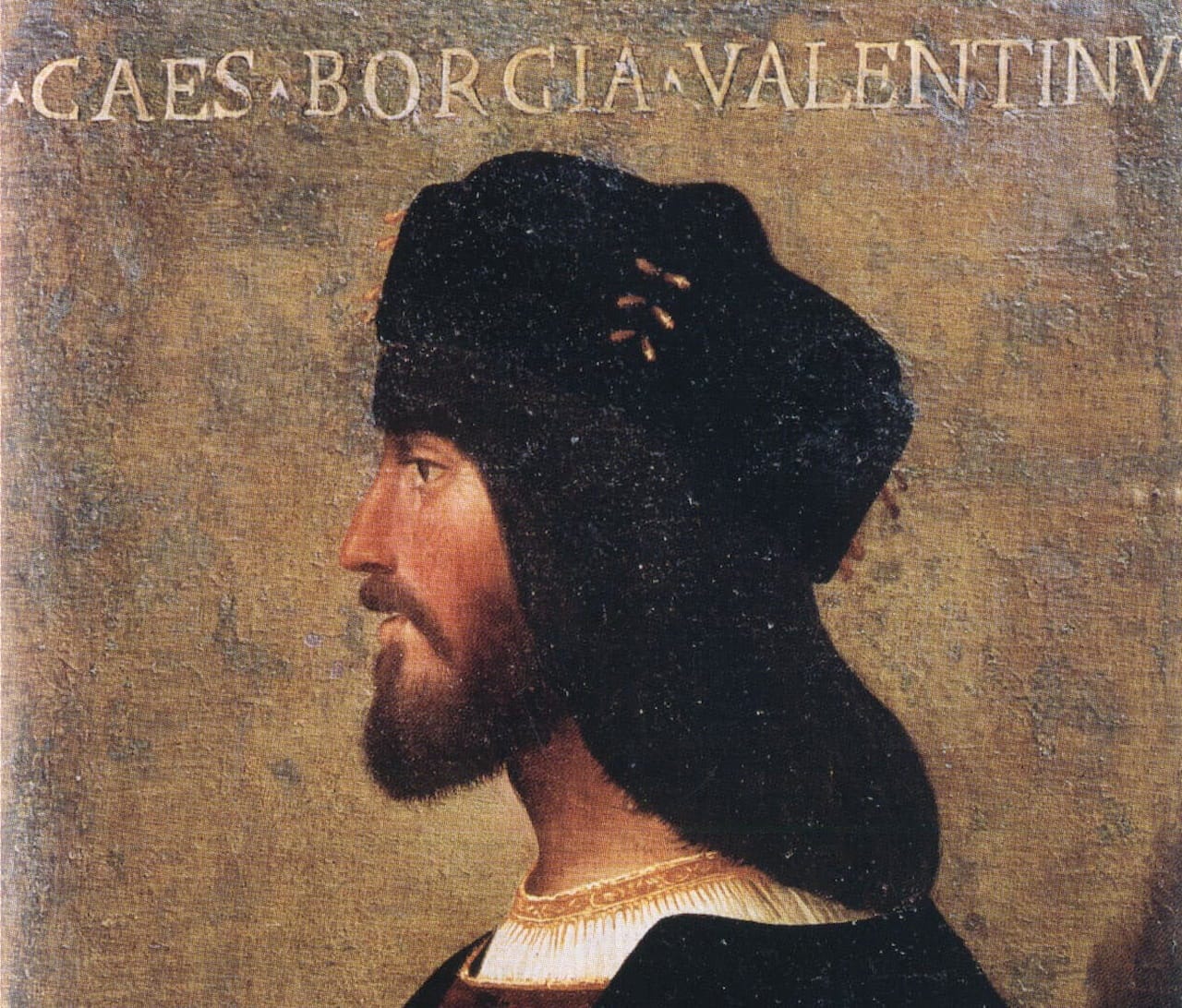
Seeing the Renaissance prince through the Johari window

As a schoolboy, the photographer and dandy Cecil Beaton – the 20th century’s premier architect of elegance and artifice, and who famously designed the sets and costumes for My Fair Lady — wrote in his diary: “I want only to be Cecil Beaton.”
He later added, “I don’t want people to know me as I really am, but as l am trying and pretending to be.”
This mid-century obsession with curated identity serves as a modern echo of the Renaissance, a period that effectively pioneered the psychological architecture known among business psychologists and consultants today as the ‘Johari Window’.
Developed by Joseph Luft and Harry Ingham, this framework suggests that our persona is divided into four panes: an ‘Open’ self known to all, a ‘Hidden’ self kept in the shadows, a ‘Blind Spot’ hidden from self but visible to others, and an ‘Unknown’ quadrant where traits and motives lie buried from everyone, including ourselves. We are made up of all four, but it helps knowing what falls under which one.
While Beaton used sequins to manage his ‘Hidden’ quadrant, over-indexing, as his childhood disclosure suggests, on a twisted form of the ‘Open’ pane, the Renaissance prince used the philosophy of sprezzatura to turn his ‘Open’ and ‘Hidden’ panes into a masterpiece of calculated nonchalance.
This was an era where the ‘public self’ turned modern, becoming what today we might refer to as the social-media version of ‘public’: not a reflection of reality but a factory of self-image management. In the case of the Renaissance prince, it was a political fortress, designed to inspire awe, as documented in Baldassare Castiglione’s The Book of the Courtier, which could be re-translated today, mutatis mutandis, as How to Out-TikTok Others.
The nobility understood that any leakage from the ‘Hidden’ self, be it a flicker of doubt or a moment of unpolished truth, could collapse the carefully maintained illusion of divine right, or whatever claims one might have to leadership and elite pre-eminence.
However, the true danger for these rulers lay in the ‘Blind Spot,’ that quadrant of the Johari Window where the prince’s self-perception of being a benevolent patron collided with the public’s perception of a tyrant. Unlike modern executives who use “360-degree feedback” to close this gap, a Renaissance ruler’s Blind Spot was often addressed through the more ‘permanent feedback’ of a Florentine dagger or a Roman poisoned goblet. And the Johari window would close, only to reopen with the next prince.


