The deception game
Everyone has opinions on artificial intelligence. Whether what we’re seeing in the GenAI space constitutes intelligence at all, whether it will scale to something general, whether that’s desirable, and what its impact will be — these are live debates, running from techno-utopianism to outright apocalypticism.
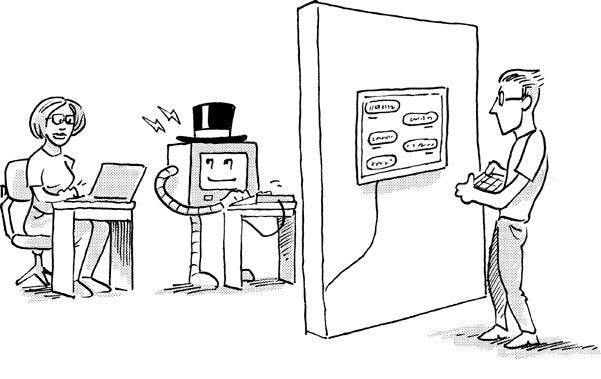
My own interest right now is narrower: deception. I find myself asking questions like, what would GenAI look like today if the Turing Test had been designed differently? Instead of a deception benchmark, what if the measure of machine intelligence had been grounded in problem-solving? I don’t know how good these questions are, but they feel worth asking. Perhaps instead of Imitation, we should call it, less placidly, a Deception Game. One that we may win, or we may lose, or may get lost in.
This week in The Times, James Marriott reported on a novel published by Hachette that had been written with significant AI input. Readers spotted bad writing, attributed it to AI, and responded with anger. The publisher withdrew the book. Marriott’s conclusion was that AI fiction is still poor enough that even uncritical readers can detect it.
That story prompted a different question for me. What if the real problem isn’t the quality of writing at all, but the concealment? Readers weren’t just reacting to bad prose. They were reacting to the sense that human effort had been outsourced to a machine and passed off as human effort to an audience that expected otherwise. Marriott touches on this; he notes that “many people do not like reading machines”, but doesn’t develop it further.
So here is a thought experiment for a Friday afternoon, one that could perhaps become a real experiment one day - or not. Think of a writer or publication you trust deeply, someone you’ve read for years with no reason to question their honesty. Now imagine you read a piece that starts well, builds well, makes genuinely sharp points. Then you’re told, after finishing, that the entire piece was written by an AI agent. Nothing in the writing signals this. But the author made no acknowledgement of it either. You re-read. The quality holds. How do you feel? Will you continue reading? Or will something have broken?
The reaction, I suspect, wouldn’t be about the writing. It would be about the implicit covenant between writer and reader, the assumption that a human is on the other side of the page, thinking and crafting for us. Violating that assumption, even silently, is its own kind of deception.


