


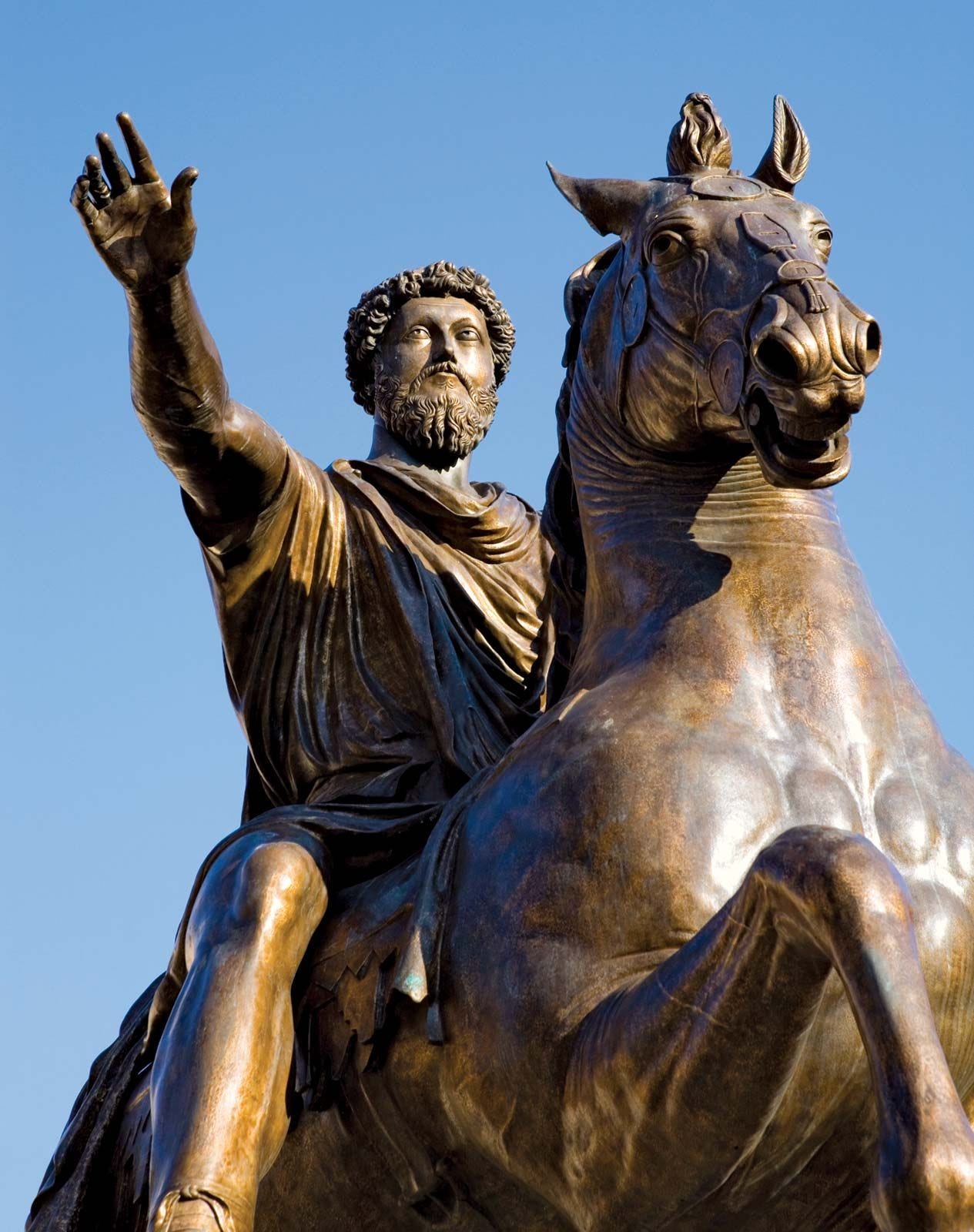
It might sound weird, but try to picture the Roman Empire as a company with one of the worst succession policy in history.
Leadership passed by birth, adoption, poison or whichever general marched fastest, a kind of UK pension triple lock system. The annual performance reviews wrote themselves. There’s a name for them, annals.
Caligula. Four years in post. Proposed his horse for high office, or so the gossip ran. Exited when his own security team stabbed him in a corridor.
Nero. Killed his mother, his wife and his reputation, in roughly that order. Strong interest in the arts. Dead at thirty, reportedly lamenting the loss of a great performer.
Domitian. Expelled the philosophers from Rome. Generally discouraged questions. Murdered by office staff.
Commodus. Fought as a gladiator, renamed Rome after himself, strangled in the bath by a wrestler. A difficult year for the whole department.
A very low Net Promoter Score overall.
And then, in the middle of this, a man who kept a journal, who was into Meditation(s) by his own pen.
Marcus Aurelius sat in a cold tent on the Danube, plague in the camps and Germans across the river, writing notes in Greek reminding himself to be patient with idiots. He read, he listened to his tutors, trying to be fair. 2,000 years later we sell his thoughts in airport bookshops around the world.
He earned some of it, to be fair. But much of the glow comes from the darkness around him. Put any conscientious adult in that line-up and they start looking like Socrates or the Buddha.
So when we toast Marcus and his Stoicism, we should raise (or break) a second, quieter glass to the dismal standard that made him shine.
That standard, however, never really retired. How many presidents, ministers and CEOs keep a notebook of their own failings? How many would let a philosopher into the room? The Stoic practice of ‘circling’ that Marcus Aurelius alluded to never quite made it into the Oval Office…
Rome set a low bar. The inheritance of Rome is also this.