The past that speaks now
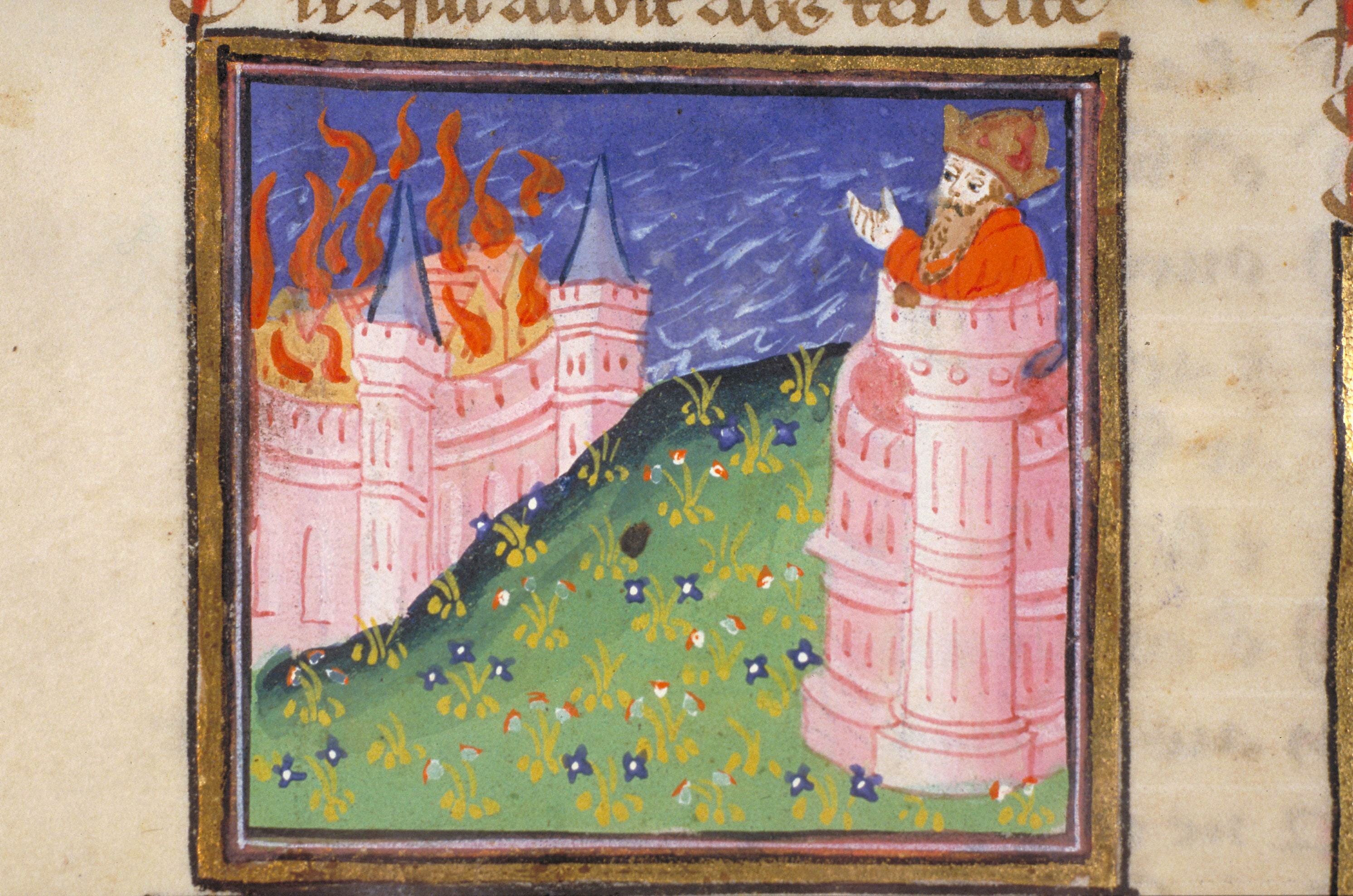
The medieval artist setting a Roman triumph in a Gothic city was not confused about history, but was making a claim about it.

A historical narrative these days can take many forms. It can be popular or academic, narrative or analytical, sympathetic or forensic. It can engage with the evidence from strikingly different angles and still hold its head up.
But there are two things it cannot do and retain any credibility: it cannot indulge in anachronism, and it cannot simply make up evidence, such as inventing speeches, fabricating dialogue, putting polished words into the mouths of historical figures as though they had been transcribed on the spot.
And yet these are precisely the two things that ancient and medieval historians did, systematically and without apology.
Thucydides, the most intellectually rigorous historian of the ancient world, freely composed the speeches he assigned to Pericles or Cleon. He was candid about it. What mattered was not verbatim accuracy but what a speaker of that character, in that situation, would most plausibly have said. Livy did the same. So did Tacitus.
The invented speech was not a failure of method. It was the method. How else do you bring the dead to life?
Medieval visual culture carried the same logic into its imagery. Open a chronicle illumination, look up at a church fresco depicting the siege of a Roman city. What do you see? Knights in chainmail, most likely. Castles with Gothic battlements. Soldiers wearing the armour of 12th-century France. Were the artists unaware that ancient Rome looked different? Almost certainly not. Did they care? That is the better question.
This is where the concepts of prochronism and actualisation come in. Prochronism names the mechanism: projecting contemporary forms backward into an earlier historical scene, a subtype of anachronism. Actualisation (from the German Vergegenwärtigung ‘making-present’) describes the intention: making the past present, pulling it forward into the lived moment of the viewer.
The underlying logic goes back to Cicero’s famous formula, historia magistra vitae, history as the teacher of life. If history’s purpose is to instruct present conduct, then anachronism is not a failure of representation. It is a vehicle. A Biblical Nativity set in 15th-century Florence, the shepherds dressed as Tuscan peasants, the stable recognisably a Lombard farmhouse. Not carelessness, but a theological argument in paint. The timeless event does not belong to the past. It is happening now, here, among us.
Something almost anagogical is going on. The past becomes a kind of eternal type, forever being reenacted in the present. The Roman battle is every battle. The Passion is not something that happened once in Jerusalem but something that keeps on happening wherever suffering and injustice take hold. Anachronism, in this reading, is the visual grammar of a worldview that refuses to let the past stay past.
Our own historiographical values run in exactly the opposite direction. We prize distance, objectivity, fidelity to the past on its own terms. We want to understand what Cicero actually said, what a Roman legionary actually wore, what the streets of first-century Jerusalem actually looked like. This is admirable, of course. But it is worth pausing to ask what we lose when we strip anachronism out of the historical imagination entirely. Do we gain accuracy at the cost of relevance? Can a past that is kept rigorously in its own time still break through to us in a way that is relevant and speaks to our current horizons and concerns?


