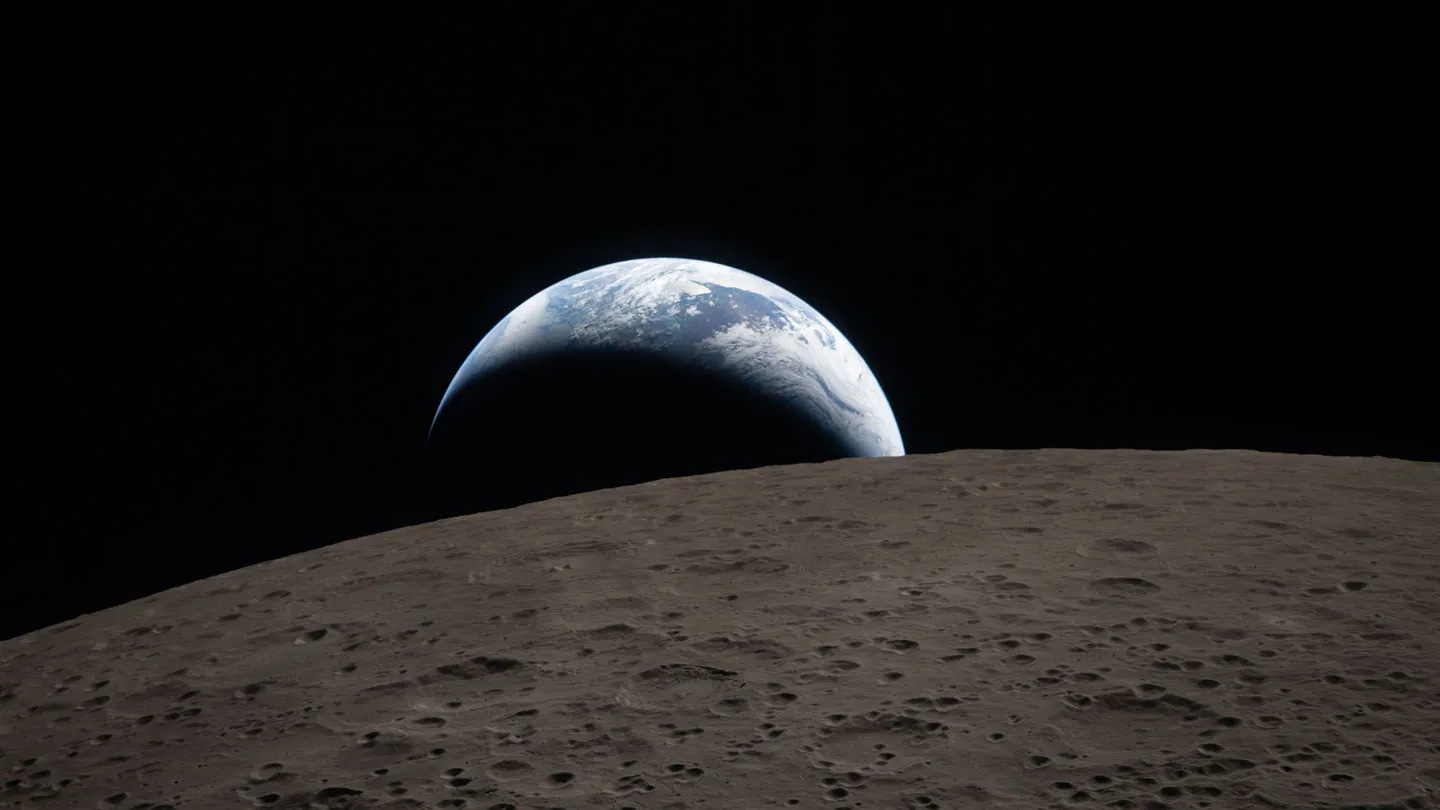
We still call it Earth
Why is our planet called “Earth” (Terra) when 71% of its surface is covered in water? And when you consider that the human body is itself roughly 60% water, the question becomes stranger still. We named the world after the part of it we stood on, the part that is relevant to us. Science comes last to the party.
That is not an accident. That is how human consciousness works.
We do not experience reality whole. We sample it. The philosopher John Vervaeke calls this relevance realisation: the mind’s continuous, mostly unconscious process of selecting what matters from a combinatorially explosive field of possible stimuli.
Every second, our senses are flooded with data. We attend to almost none of it. What we attend to is shaped by what is relevant to us, biologically, culturally, personally. We named our world after ground because we walk on ground. The ocean was other. It’s less relevant to our terrestrial lives.
It might look like a cognitive flaw, but it’s not. It is a structural feature of having a self. And it’s a central feature of what makes us human.
One of the most persistent myths about medieval Europe is that its people believed they were at the centre of the universe. The Ptolemaic system placed Earth there, and we have read that as ignorance or arrogance. But consider what Edmund Husserl, the father of phenomenology, called the “natural attitude”: the pre-reflective, lived experience of being a subject in a world. From inside experience, you are always the centre. The horizon recedes in every direction from where you stand. The sun rises for you and sets for you. Phenomenologically, geocentrism is not wrong. It is honest.
The so-called fallacies of anthropomorphism, false attribution, and causal over-reading are routinely presented as errors to be corrected. They are, of course, errors in formal reasoning. But they are also symptoms of something more fundamental: the fact that all experience originates in a self. Thinking, feeling, and acting emerge from a first-person perspective. There is no view from nowhere, in the words of Thomas Nagel. It’s hard to imagine what that would look like.
Even science knows this, at some level. The scientific method is a collective technology designed to discipline and aggregate first-person observations into something that feels, and, more importantly, usefully functions, like objectivity. But the data always begins with a human looking at something and deciding it matters.
We still call it Earth.


